About SEPERATORY FUNNEL
| SEPERATORY FUNNEL |
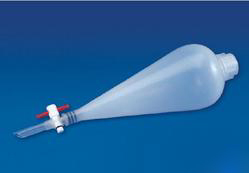
| Polylab seperatory funnel is made of polypropylene, giving it excellent contact clarity and strength. This pear shaped, autoclavable separating funnel has a leakproof threaded screw cap. The polypropylene stopcock, fitted with a self lubricating PTFE plug, is push fitted to the stem of the seperatory funnel.
Material : Polypropylene | CODE NO. | PARTICULARS | PACKING (Pcs) | | 81201 | Seperatory Funnel 100 ml | 2 | | 81202 | Seperatory Funnel 250 ml | 2 | | 81203 | Seperatory Funnel 500 ml | 2 | |
Superior Chemical ResistanceDesigned with borosilicate glass and a PTFE stopcock, this separatory funnel offers excellent resistance against most acids, bases, and organic solvents. Its high durability makes it ideal for demanding laboratory workflows and heterogeneous phase separations.
Accurate Measurement and Safe HandlingThe transparent glass body is marked with precise volume graduations, allowing users to monitor liquid levels effortlessly. The manual PTFE stopcock ensures controlled dispensing, while standard ground glass or plastic stoppers provide secure closure during operation.
Effortless Maintenance and Versatile UseThis separatory funnel is autoclavable and compatible with common laboratory detergents, ensuring easy cleaning and sterilization. Available in various capacities, it suits diverse laboratory requirements, from routine analysis to advanced chemical experiments.
FAQs of SEPERATORY FUNNEL:
Q: How do I properly use the separatory funnel to separate two immiscible liquids?
A: Start by ensuring the funnel is clean and dry. Pour your mixture into the funnel, insert the stopper, and securely close the PTFE stopcock. Gently shake the funnel, occasionally venting if necessary, then allow the layers to separate. Open the stopcock to release one layer at a time as indicated by the graduated markings.
Q: What makes the PTFE stopcock and borosilicate glass ideal for chemical laboratories?
A: PTFE is highly resistant to chemical attack, providing longevity and safety during use, while borosilicate glass stands up to high temperatures and thermal shock, ensuring durability and reliability in harsh laboratory environments.
Q: When should I choose a plastic stopper over a ground glass stopper?
A: Plastic stoppers are generally preferred when working with solutions that could react with glass or require a lightweight option. Ground glass stoppers offer excellent sealing and are suitable for most standard procedures involving chemical separation.
Q: Where should the separatory funnel be stored when not in use?
A: Store the funnel in a clean, dry, and stable location, such as a designated glassware cabinet or laboratory shelf, away from extreme temperature changes and potential mechanical damage to ensure optimal longevity.
Q: What is the maximum temperature and pressure limit for this separatory funnel?
A: The funnel is designed for use up to approximately 200C and must only be used under atmospheric pressure. It is not suitable for pressurized or vacuum conditions.
Q: How can I clean and sterilize the separatory funnel after use?
A: Clean the funnel with compatible laboratory detergents and rinse thoroughly. For sterilization, the funnel can be autoclaved, thanks to its borosilicate glass construction and PTFE stopcock, ensuring complete removal of residual chemicals or contamination.
Q: What are the primary benefits of using this separatory funnel for laboratory processes?
A: The funnel offers high chemical resistance, accurate volume measurement, ease of cleaning, and versatility in handling various liquid-liquid extraction processesmaking it a dependable tool for research, analysis, and routine laboratory operations.









 Send Inquiry

 Send Inquiry