

Back to top
Send SMS Send Inquiry
Parrallel Resonance Circuit

Parrallel Resonance Circuit

Parrallel Resonance Circuit Specification

  • Temperature Range
  • Dependent on material properties of components
  • Voltage
  • AC Voltage (Vs)
  • Power Source
  • Voltage Source (AC)
  • Accuracy
  • High
  • Core Components
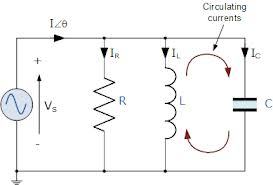
  • Resistor (R) Inductor (L) Capacitor (C) Voltage Source (Vs)
  • Automation Grade
  • Manual
  • Feature
  • Circulating currents at resonance
  • Measurement Range
  • Frequency range dependent on circuit components
  • Model No
  • None
  • Frequency
  • Determined by the values of L and C (Resonance Frequency)
  • Equipment Materials
  • Electrical components (Resistor Inductor Capacitor)
  • Type
  • Parallel Resonance Circuit
  • Usage
  • Used in frequency-selective applications like filters and tuning circuits
  • Display Type
  • None
  • Dimension (L*W*H)
  • Not applicable for circuit schematic
  • Weight
  • Dependent on physical components


About Parrallel Resonance Circuit


The Parallel Resonance Circuit is a high-accuracy electrical component assembly used in frequency-selective applications such as filters and tuning circuits. Comprising of a resistor, inductor, capacitor, and voltage source, this circuit facilitates circulating currents at the resonance frequency determined by the values of inductance and capacitance. With manual automation grade and AC voltage source, the circuits temperature range and measurement range are dependent on the material properties and components used. Its weight varies based on the physical components, and the absence of a display type and specific dimensions make it versatile for different applications.

FAQs of Parrallel Resonance Circuit:


Q: What is the primary usage of the Parallel Resonance Circuit?

A: The Parallel Resonance Circuit is primarily used in frequency-selective applications like filters and tuning circuits.

Q: What components make up the Parallel Resonance Circuit?

A: The Parallel Resonance Circuit consists of a resistor, inductor, capacitor, and a voltage source.

Q: How is the resonance frequency determined in the Parallel Resonance Circuit?

A: The resonance frequency in the Parallel Resonance Circuit is determined by the values of inductance (L) and capacitance (C).

Q: What is the power source for the Parallel Resonance Circuit?

A: The power source for the Parallel Resonance Circuit is an AC Voltage Source (Vs).

Q: What automation grade does the Parallel Resonance Circuit have?

A: The Parallel Resonance Circuit has a manual automation grade.

Tell us about your requirement
product

Price:

Quantity
Select Unit

  • 50
  • 100
  • 200
  • 250
  • 500
  • 1000+
Additional detail
Mobile number

Email

More Products in APPLIED MECHANICS Category

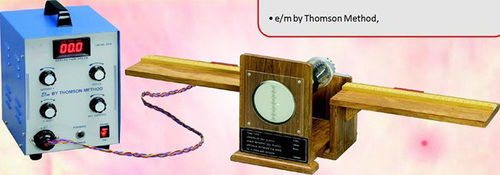
E/M by Thompson Method

E/M by Thompson Method

Equipment Materials : Brass Aluminum

Weight : 5.5 kg

Feature : Precise measurement of chargetomass ratio (e/m)

Type : Experimental Physics Equipment

Power Source : AC Mains

Model No : E/MTM01

Battery Cell Tester

Battery Cell Tester

Equipment Materials : Plastic Metal

Weight : Lightweight

Feature : Portable Design

Type : Battery Tester

Power Source : None (Manual)

Model No : BCT100

Raking Shore

Raking Shore

Equipment Materials : Timber

Weight : Variable depending on materials used and dimensions

Feature : Provides support for damaged or unstable walls during construction or repair

Type : Raking Shore

Power Source : None

Model No : Double Raking Timber Shore

Spur Gears

Spur Gears

Equipment Materials : Alloy Steel, Cast Iron, Carbon Steel, Stainless Steel

Weight : 1 kg to 35 kg

Feature : Precision cut, high strength, corrosion resistant, durable

Type : Spur Gear

Power Source : Mechanical drive system

Model No : SG Series


SINGHLA SCIENTIFIC INDUSTRIES
GST : 06ACOPS0805K1ZD
No-5309/27, Punjabi Mohalla, Ambala Cantt - 133001, Haryana, India
Phone :07971191038
Mr Devender Singhla (Chief Executive)
Mobile :07971191038