About MICRO TEST PLATES
| MICRO TEST PLATES |
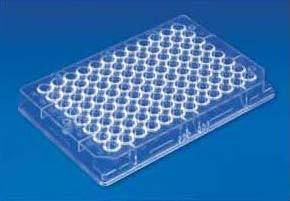
Polylab micro test plates are made of optically clear, non-toxic Polystyrene. These plates with 96 U bottom or flat bottom wells bear alpha-numeric index. Uniform placement of all the wells facilitate use of multi channel pipettes.
Material : Polystyrene
| CODE NO. | PARTICULARS | PACKING (Pcs) | | 66801 | Micro Test Plate Flat Bottom | 72 | | 66802 | Micro Test Plate U Bottom | 72 |
|
Designed for Laboratory PrecisionMicro Test Plates are engineered to provide accurate, reliable results across microbiological, serological, and cell-based applications. Their uniform well sizes, clear material options, and precise gradations support efficient observation and data collection, making them essential for everyday laboratory workflows.
Versatile Material and Capacity OptionsSelect from polystyrene, polypropylene, or borosilicate glass plates, with capacities ranging from 0.2 to 0.4 ml per well. The availability of various well counts and pack sizes ensures that both small-scale research and high-throughput screening needs are met effectively.
FAQs of MICRO TEST PLATES:
Q: How do I choose between different materials for micro test plates?
A: The choice of materialpolystyrene, polypropylene, or borosilicate glassdepends on your assay requirements. Polystyrene offers excellent optical clarity for spectrophotometry, polypropylene provides high chemical resistance, and borosilicate glass is suitable for applications requiring autoclavability and minimal chemical reactivity.
Q: What are the benefits of opting for plates with white or black opaque borders?
A: Plates with white or black opaque borders minimize background interference and reduce cross-talk in luminescence and fluorescence assays, enhancing the accuracy of measurements and improving data reliability in sensitive experiments.
Q: When is the inclusion of a lid recommended for micro test plates?
A: Using a lid is advisable during cell culture, long incubations, or to prevent contamination and evaporation. Select models come with lids, but you can also purchase plates without lids for immediate access and workflows requiring frequent sampling.
Q: Where can these micro test plates be used within the laboratory setting?
A: These plates are suitable for use in microbiology, serology, molecular biology, cell culture labs, and for immunoassays. Their compatibility with industry-standard equipment ensures broad applicability across research and clinical laboratories.
Q: What is the process for sterilizing the micro test plates before use?
A: Polystyrene and polypropylene plates can be autoclaved if designed for it, while borosilicate glass plates are naturally autoclavable. Always verify the manufacturers recommendations before autoclaving to maintain plate integrity and functionality.
Q: How does stackability benefit laboratory workflow and storage?
A: Stackable micro test plates facilitate efficient storage and handling, minimizing bench clutter and saving valuable laboratory space, particularly important during high-throughput testing and multi-assay workflows.









 Send Inquiry

 Send Inquiry