

About Inclined Plane, Wood & Metal
Inclined Plane, Wood & Metal
Comprises of a wooden plane consisting of two laminated wooden boards joined together by metal strips at both ends for rigidity. One end of the plane is hinged to a cast metal base, while the other end has a pulley clamp attached to it. This also has arc scale mounted on the base with a circular scale calibrated from 0 to 45°´1° to measure the angle of inclination and vertical scale calibrated in centimeters to measure the height. The inclination of the wooden plane can be adjusted through a clamp provided on the side of plane with a tightening knob and also acts as index pointer alongside circular scale for reading the angle of inclination. Complete cord, weight pan, metal roller with collar and hook and friction slider hook, and instruction manual.
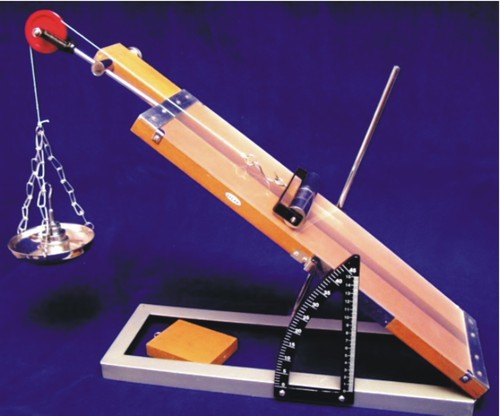
Precision and Durability for Educational ExperimentsThis inclined plane apparatus is engineered for accuracy and longevity, combining polished wooden surfaces with anti-corrosive metal parts. The graduated scale and locking clamp allow precise angle adjustments up to 30, supporting a wide range of physics demonstrations. Side railings and anti-skid rubber feet enhance both safety and usability, making it ideal for student labs.
Ready-to-Use and Portable DesignDelivered fully assembled and weighing approximately 2-4 kg, this device is easy to transport between classrooms or lab settings. Its compact dimensions ensure it fits conveniently in storage spaces, while the robust construction withstands repeated educational use. Maintenance is simple, requiring only basic cleaning for extended product life.
FAQs of Inclined Plane, Wood & Metal:
Q: How is the inclination of the plane adjusted on this apparatus?
A: The inclination can be easily adjusted using the graduated scale integrated into the apparatus, allowing users to set precise angles up to 30. A locking clamp secures the selected angle, ensuring consistent and accurate setup for each experiment.
Q: What experiments can be performed with this inclined plane?
A: This apparatus is designed for physics experiments related to friction and motion, such as measuring the coefficient of friction, studying the components of forces on an incline, and analyzing the effect of different surfaces on sliding objects.
Q: When is this inclined plane apparatus typically used in educational settings?
A: It is most commonly used during physics laboratory sessions in schools and colleges, particularly when students are learning about basic mechanics, motion, and friction concepts.
Q: Where can this inclined plane apparatus be used?
A: The apparatus is suitable for classroom and laboratory environments in educational institutions, such as schools and colleges. Its stable base and portable size make it adaptable to various tabletop surfaces.
Q: What materials are used in the construction of the inclined plane, and how do they benefit usage?
A: Constructed from smooth polished wood and anti-corrosive coated metal, the apparatus ensures longevity, resistance to wear, and smooth motion during experiments. The anti-skid rubber feet increase stability for safe operation.
Q: How is the apparatus maintained and stored after use?
A: Maintenance is straightforward; simply wipe down the surfaces with a dry or slightly damp cloth. The pre-assembled and compact design makes storage easy, minimizing the risk of damage between uses.
Q: What are the main benefits of using this inclined plane apparatus in laboratory experiments?
A: It offers accurate measurements, durability, ease of use, and enhanced safety features. Its design supports effective demonstration of core physics concepts, making learning both practical and reliable for students.