


FEATURES |
Extremely Useful for Water Analysis Highly Stable and Accurate High Sensitivity Range 3 Digit Display |
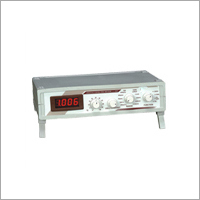
Digital Conductivity/TDS Meter 641 is extremely useful for fast and accurate determination of Total Dissolve Solids in liquid. A high content of dissolved solids elevates the density of water influences osmo-regulation of fresh water organisms and reduces solubility of gases thereby reducing the utility of water for drinking, irrigation and industrial purpose. Therefore, determination of Total Dissolved Solids in one of the important parameter in water analysis
The use of solid stat technology and IC circuitry makes the instrument versatile and reliable. The instrument is ideal for testing water, drinking water, waste water brine solution, sea water and soluble salts etc.
SPECIFICATIONS : -
Range TDS | 0-200 ppm, 0-2 ppt, 0-20.00 ppt (20,000 ppm), 0-200 ppt (2,00,000 ppm) 0-1000 ppt (1 million ppm) |
Range Cond. | 200 uS, 2 mS, 20 mS, 200 mS, 2000 mS |
Resolution | 0.1 ppm |
Accuracy | 1%% FS 1 digit |
Cell constant | Adjustable with indication on Digital Display |
Temperature Compensation | 0 to 500C |
Resolution | 0.1 ppm |
Cond/TDS Cell | Platinum DIP Type |
Display | 3 Digit Seven Segment LED Display |
Power | 230V10%%AC,50Hz |
Dimensions | 275 x 175 x 75 mm (L x B x H) (Approx.) |
Weight | 2 Kg (Approx.) |
Accessories | Coductivity/TDS Cell, Operation Manual, Dust Cover |
Note : Specifications are subject to change due to continuous improvements.

Price:
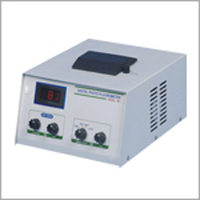
Power Source : Electric
Type : Digital fluorometer
Feature : Digital fluorescence measurement adjustable knobs for calibration
Equipment Materials : Metal casing with durable components
Accuracy : High accuracy for fluorescence measurement
Model No : 681
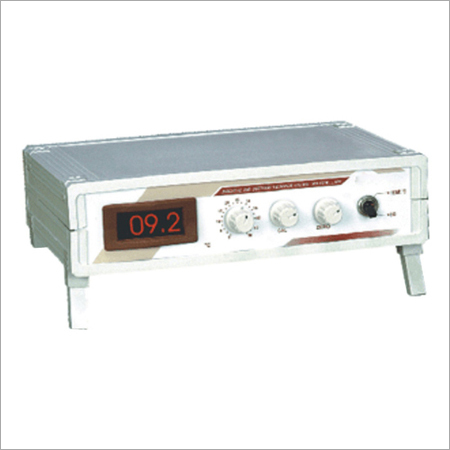
Power Source : Battery Operated
Type : Portable Dissolved Oxygen Meter
Feature : Highly Efficient
Equipment Materials : High Grade Plastic and Metal
Accuracy : 100 %
Model No : 801 & 811
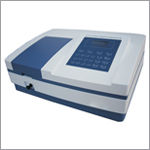
Power Source : AC 220 V
Type : UVVIS Spectrophotometer
Feature : Highly Efficient
Equipment Materials : Powder Coated Metal Body
Accuracy : 100 %
Model No : 2373
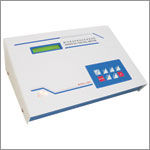
Power Source : Electric
Type : Microprocessor ECTDSSAL Meter
Feature : Highly Efficient
Equipment Materials : ABS Plastic Body
Accuracy : 100 %
Model No : 1602
|


 |
SINGHLA SCIENTIFIC INDUSTRIES
All Rights Reserved.(Terms of Use) Developed and Managed by Infocom Network Private Limited. |

 Send Inquiry

 Send Inquiry