About BIOSAFE CABINET CLASS II
BIOSAFE CABINET CLASS II
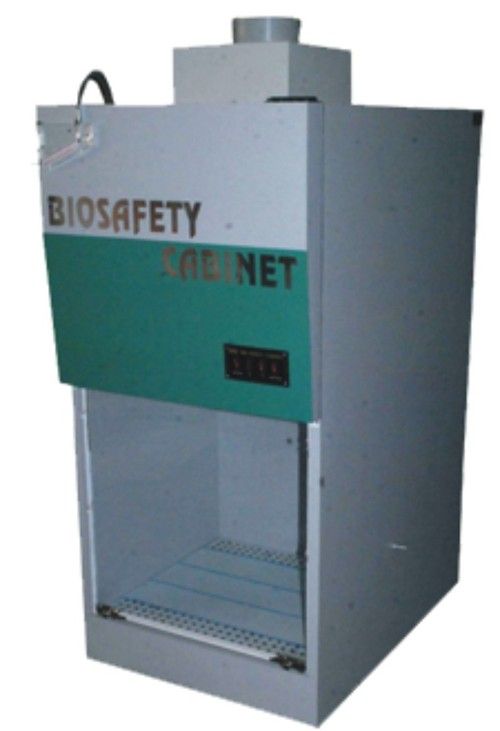
Biological Safety Cabinet are fabricated out of thick board duly sun mica clad. Interior surfaces are epoxy painted for its longer life. The worktable is made of heavy gauge S.S. sheet and is fitted with U.V Germicidal Light, static pressure Manometer, Exhaust System (suitable for 6 feet duct) and Virus Burn Out Unit. Side panels are made out of thick transparent plexi glass duly framed. The unit is fitted with pre filter and HEPA Filter. Air is drawn through pre filter and is made to pass through highly effective HEPA (High Efficiency Particular Air) filters having efficiency retaining all air- borne particles of size 0.3 micron and larger. Using a dynamic balancing machine, the blower and motor assembly is statically and dynamically balanced. Motor of 1/ 4 H.P. capacity operates with minimum noise level. The working area is illuminated by fluorescent lighting fitted to the unit. The height of the working table provides a comfortable "Sit Down" working position for the operator.
Robust Protection and CleanlinessDesigned for sensitive laboratory work, this Class II biosafety cabinet combines high-performance HEPA filtration, a double-wall thermal construction, and safety interlocks to protect users and samples alike. Programmable UV sterilization and digital control panel further ensure a sterile and easily managed work environment for research and analysis.
User-Friendly Controls and MaintenanceThe microprocessor-based control system paired with a clear digital display makes monitoring and operation intuitive. Easy access maintenance panels, adjustable stands, and in-built exhaust systems mean daily operation and routine servicing are efficientsupporting seamless laboratory workflows without compromising safety or productivity.
Advanced Features for Modern LaboratoriesWith its sliding toughened glass window, low vibration, and negligible noise, this cabinet accommodates a variety of laboratory needs. Equipped with bright LED lighting, two electric sockets, and epoxy powder coated surfaces, it stands out for both durability and comfortable use over extended hours.
FAQs of BIOSAFE CABINET CLASS II:
Q: How does the BIOSAFE CABINET CLASS II ensure laboratory safety during use?
A: This cabinet employs a HEPA filter with 99.99%% efficiency at 0.3 microns, a programmable UV lamp, and toughened sliding safety glass to maximize containment. The built-in safety interlocks and double wall thermal insulation add additional layers of protection for users and samples.
Q: What materials are used in the construction of the work area for durability?
A: The work area is fabricated from premium SS304 grade stainless steel, ensuring chemical resistance, durability, and easy cleaning, ideal for demanding laboratory environments.
Q: When should the UV sterilization timer be programmed and used?
A: The programmable UV timer can be set before or after laboratory operations to sterilize the cabinet interior, reducing biological contaminants and maintaining a sterile workspace for subsequent use.
Q: Where can the BIOSAFE CABINET CLASS II be installed effectively?
A: This cabinet is suitable for laboratories in research institutions, hospitals, and industrial settings due to its mobility (castor wheels), robust packing (wooden crate), and adjustable stands for various bench heights.
Q: What is the process for maintaining this biosafety cabinet?
A: Routine maintenance involves accessing easy-to-remove panels for filter or UV lamp inspection and replacement. The durable stainless steel work surface also facilitates regular cleaning for ongoing hygiene.
Q: How does the digital control panel benefit the user?
A: The digital control panel provides real-time monitoring and control of parameters such as airflow, UV timing, and lighting, contributing to accuracy and user convenience during laboratory operations.
Q: What are the advantages of the built-in exhaust system and low vibration levels?
A: The built-in exhaust system ensures safe removal of contaminated air, while negligible vibration prevents disturbances to sensitive procedures, enhancing both operator comfort and experiment reliability.









 Send Inquiry

 Send Inquiry