MICRO TEST PLATES
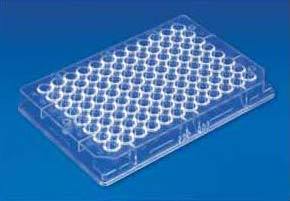
Polylab micro test plates are made of optically clear nontoxic Polystyrene These plates with 96 U bottom or flat bottom wells bear alphanumeric index Uniform placement of all the wells facilitate use of multi channel pipettes
Material Polystyrene
CODE NO PARTICULARS PACKING Pcs
66801 Micro Test Plate Flat Bottom 72
66802 Micro Test Plate U Bottom 72
Designed for Laboratory Precision
Micro Test Plates are engineered to provide accurate reliable results across microbiological serological and cellbased applications Their uniform well sizes clear material options and precise gradations support efficient observation and data collection making them essential for everyday laboratory workflows
Versatile Material and Capacity Options
Select from polystyrene polypropylene or borosilicate glass plates with capacities ranging from 02 to 04 ml per well The availability of various well counts and pack sizes ensures that both smallscale research and highthroughput screening needs are met effectively
FAQs of MICRO TEST PLATES
Q How do I choose between different materials for micro test plates
A The choice of materialpolystyrene polypropylene or borosilicate glassdepends on your assay requirements Polystyrene offers excellent optical clarity for spectrophotometry polypropylene provides high chemical resistance and borosilicate glass is suitable for applications requiring autoclavability and minimal chemical reactivity
Q What are the benefits of opting for plates with white or black opaque borders
A Plates with white or black opaque borders minimize background interference and reduce crosstalk in luminescence and fluorescence assays enhancing the accuracy of measurements and improving data reliability in sensitive experiments
Q When is the inclusion of a lid recommended for micro test plates
A Using a lid is advisable during cell culture long incubations or to prevent contamination and evaporation Select models come with lids but you can also purchase plates without lids for immediate access and workflows requiring frequent sampling
Q Where can these micro test plates be used within the laboratory setting
A These plates are suitable for use in microbiology serology molecular biology cell culture labs and for immunoassays Their compatibility with industrystandard equipment ensures broad applicability across research and clinical laboratories
Q What is the process for sterilizing the micro test plates before use
A Polystyrene and polypropylene plates can be autoclaved if designed for it while borosilicate glass plates are naturally autoclavable Always verify the manufacturers recommendations before autoclaving to maintain plate integrity and functionality
Q How does stackability benefit laboratory workflow and storage
A Stackable micro test plates facilitate efficient storage and handling minimizing bench clutter and saving valuable laboratory space particularly important during highthroughput testing and multiassay workflows









 Send Inquiry


 Send Inquiry
