


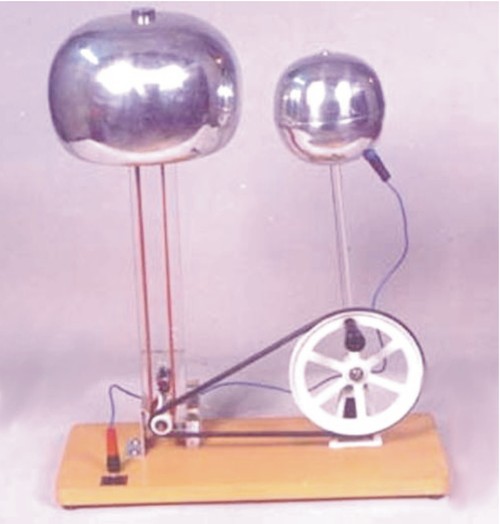
Van de Graff Generator, Hand Driven
completely hand operated, mounted on a base. A metal sphere surrounds the upper pulley assembly and charge accumulates on the sphere which is supported on an insulated transparent plastic column that also supports the pulley assembly at its upper end. The charge builds up until electrical breakdown of air surrounding the sphere occurs. Supplied with discharging sphere, metalized spheres, Faradays pail, head of hair, point discharger, electrical whirl and neon bulb.

Price:
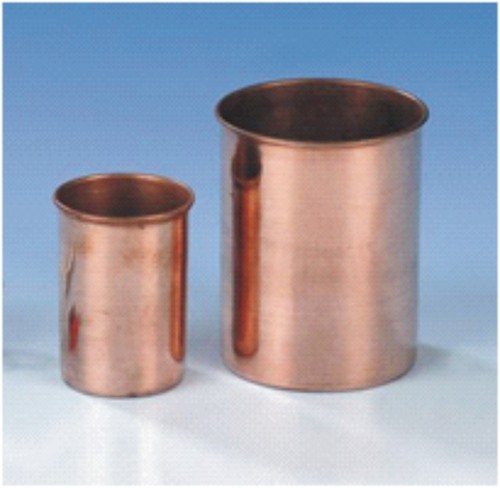
Model No : CAL100
Usage : Heat measurement in laboratories
Feature : Durable and efficient
Weight : Approx. 2 kg
Dimension (L*W*H) : Standard dimensions
Temperature Range : Room temperature to 100C
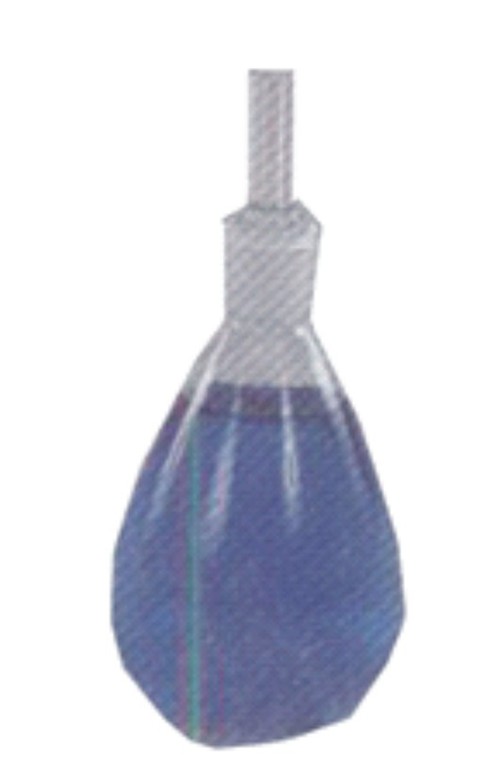
Model No : SGBottle500
Usage : Used in laboratories for measuring specific gravity
Feature : Precise measurement of specific gravity
Weight : 300 grams
Dimension (L*W*H) : Varies with design
Temperature Range : 0C 50C
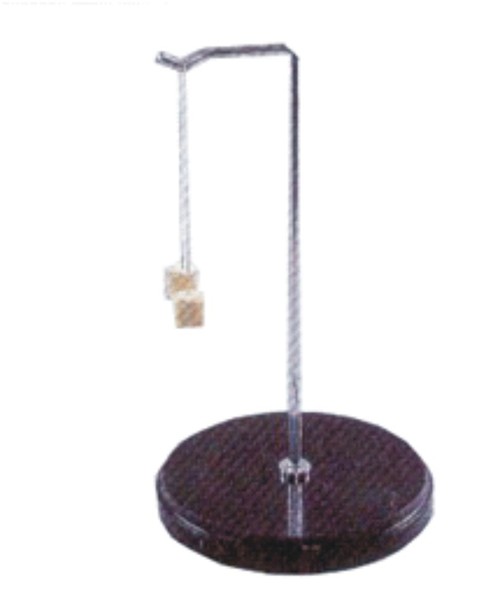
Model No : PBE001
Usage : Lab Experiments Educational Demonstration
Feature : Demonstrates Electrostatic Principles
Weight : Approx. 200g
Dimension (L*W*H) : Base Diameter: ~10cm Overall Height: ~15cm
Temperature Range : Room Temperature
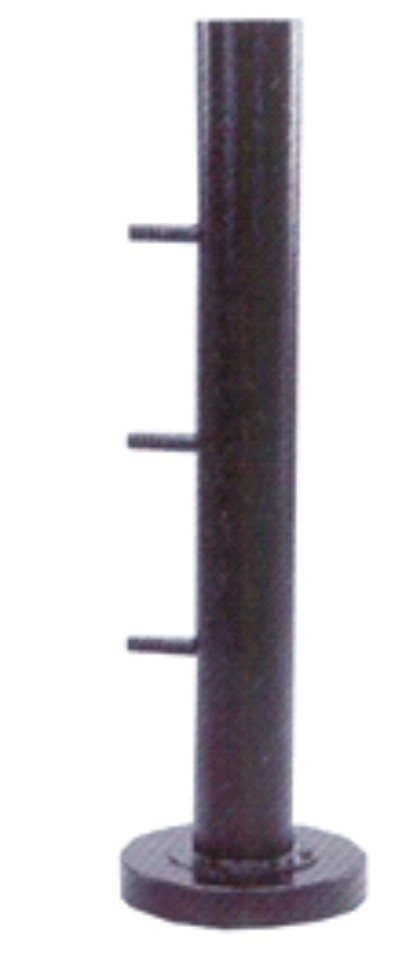
Model No : SC001
Usage : Spouting applications in industrial setups
Feature : Efficient spouting mechanism with multiple ports
Weight : Approx. 3 kg
Dimension (L*W*H) : Height: 600mm Width: 80mm Length: 80mm
Temperature Range : Suitable for standard temperature conditions
|


 |
SINGHLA SCIENTIFIC INDUSTRIES
All Rights Reserved.(Terms of Use) Developed and Managed by Infocom Network Private Limited. |

 Send Inquiry

 Send Inquiry