About Separating Funnels, Pear shape with socket, & Screw
| Separating Funnels, Pear shape with socket, & Screw |
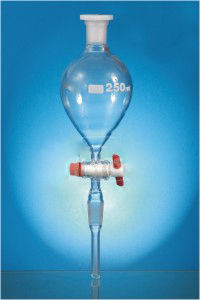
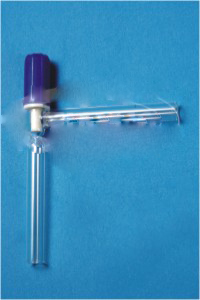
| Separating Funnels, Pear shape with socket, & Screw Type PTFE Key stopcock, with cone & with stopper. | |
|
Precision and Chemical Resistance for Reliable SeparationThis separating funnel features a pear-shaped design for optimal phase separation, paired with a PTFE stopcock for precision control of liquid release. The use of borosilicate glass and PTFE ensures exceptional chemical resistance, making it ideal for handling aggressive acids, bases, and solvents. Its transparent construction ensures easy monitoring during experiments, supporting a range of laboratory applications.
Autoclavable and Leakproof Design for Laboratory SafetySafety is paramount in laboratory environments. This funnel is autoclavable, allowing both steam and chemical sterilization without compromising its integrity. The threaded screw cap, available in plastic or glass, enhances leak resistance, providing secure operation. Individual carton packaging protects the funnel during transport and storage, ensuring ready-for-use condition.
FAQs of Separating Funnels, Pear shape with socket, & Screw:
Q: How should the separating funnel be cleaned and sterilized after use?
A: The separating funnel can be washed with standard laboratory detergents and rinsed thoroughly. It is autoclavable, allowing for sterilization in a steam autoclave at temperatures up to 250C. Additionally, it is compatible with chemical sterilization agents due to its resistance to acids, solvents, and bases.
Q: What types of laboratory processes is this funnel best suited for?
A: This funnel is primarily used for separating immiscible liquids, such as in solvent extraction, liquid-liquid separation, and organic synthesis. Its pear-shaped design and PTFE stopcock provide controlled, precise phase separation in chemical, pharmaceutical, and research laboratories.
Q: When should I use the screw cap versus the stopcock for controlling liquids?
A: The screw cap is primarily for securely sealing the funnel, preventing leaks and evaporation when mixing or shaking. The PTFE stopcock should be used to precisely control the flow and release of liquids during the separation process. Always ensure the stopcock is closed before adding or shaking solutions.
Q: Where is this separating funnel typically used?
A: These funnels are widely used in scientific laboratories, educational institutions, and industrial research settings across fields such as chemistry, biochemistry, and environmental science for the separation of liquid phases and extraction of solvents.
Q: What are the benefits of choosing borosilicate glass and PTFE stopcock construction?
A: Borosilicate glass offers excellent resistance to thermal shock and chemicals, while the PTFE stopcock ensures precise control and is inert to most laboratory reagents. This combination delivers durability, safety, and performance for a broad range of laboratory applications.
Q: How does the pear shape enhance the separation process?
A: The pear-shaped body promotes efficient separation by providing a larger surface area for the two immiscible liquids to settle and form distinct layers, allowing for cleaner and more accurate extraction from the lower or upper phase.








 Send Inquiry

 Send Inquiry