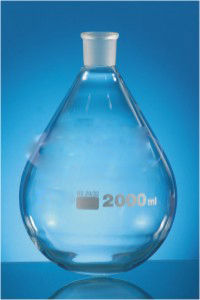
About Reagent Bottles, Narrow Mouth
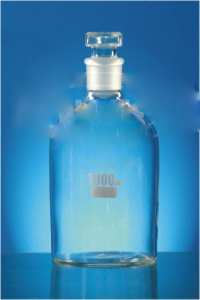
Made of borosilicate glass, offered Reagent Bottle, Narrow Mouth is accessible with airtight hollow stopper or cap. This type of bottle is suitable for storing chemical powder and fluid in laboratories. It can be availed in 30 ml, 1000 ml, 500 ml, 250ml, 125 ml, 60 ml, 30 ml and 2000 ml storage capacity based choice. Provided Reagent Bottle, Narrow Mouth is transparent in look. The volume of stored material can be easily visible. It has standard wall thickness and it is breakage proof.
Superior Chemical Compatibility and DurabilityThese borosilicate glass reagent bottles are engineered to withstand a vast array of chemical substances, including acids, alkalis, and solvents. The clear, durable glass combines with a polypropylene screw cap for reliable, leak-proof storage. The robust construction allows for regular reuse after appropriate cleaning and sterilization, offering efficiency for laboratory workflows.
Sterilization and Ease of MaintenanceThe bottles are designed for routine sterilization through both steam autoclaving and dry heat methods. The smooth glass surface facilitates easy cleaning, minimizing contamination risks. Accurate gradations provide quick volumetric reference, streamlining laboratory processes while ensuring solution integrity.
FAQs of Reagent Bottles, Narrow Mouth:
Q: How should I clean and sterilize these narrow mouth reagent bottles?
A: After use, thoroughly clean the bottles with suitable laboratory detergents and rinse with distilled water. They can be sterilized using either steam autoclaving or dry heat methods, ensuring the polypropylene (PP) screw cap is removed or loosely placed during autoclaving to avoid pressure buildup.
Q: What chemicals can be safely stored in these bottles?
A: These bottles are chemically compatible with a wide range of acids, alkalis, solvents, and general laboratory reagents. Their borosilicate glass construction and PP cap provide excellent resistance to most chemicals commonly encountered in laboratory settings.
Q: When is it necessary to replace a reagent bottle?
A: Replace the bottle if you observe cracks, chips, excessive scratches, or if the graduations become unreadable. Regular inspection after washing and prior to reuse is recommended to maintain maximum safety and performance.
Q: Where are these reagent bottles commonly used?
A: These bottles are primarily used in research laboratories, quality control labs, academic institutions, and industrial environments for the storage and containment of chemicals and reagents.
Q: What is the benefit of choosing borosilicate glass for reagent bottles?
A: Borosilicate glass provides superior resistance to thermal shock and chemical attack, allowing safe use up to 250C and ensuring long life and reliability, even with regular sterilization and use of aggressive chemicals.
Q: How does the leak-proof screw cap enhance laboratory safety?
A: The polypropylene screw cap ensures a secure, leak-proof seal when properly tightened, reducing the risk of spills, evaporation, and accidental exposure to hazardous chemicals during storage or transport.








 Send Inquiry

 Send Inquiry